
The essential happens in listening
A listening guide to unknown violin concertos

Toshi Ichiyanagi (1933–2022): Double Concerto for Violin, Shamisen and Orchestra (2021)
A convergence of sounds in contemporary Asian and European musical culture
Eduard Tubin (1905–1982): Concerto for Violin and Orchestra No. 1 in D major (1941–42)
A "Christmas Concert" in difficult times from Estonia in the 1940s
Passion music of the 21st century
Ferruccio Busoni (1866–1920): Benedictus from the Missa Solemnis, Op. 123, by L. van Beethoven, arranged for
violin and orchestra (1916)
A transcription that raises questions and
offers food for thought.
Schnelzer, Albert (*1972): Violin
Concerto No.2, “Nocturnal Songs” (2018)
Capturing a feeling of weightlessness, of floating, a state between wakefulness and sleep
Grace Williams (1906–1977): Violin Concerto (1949–50)
Newly discovered and sensationally revived at the 2023 Proms
Sauli Zinovjev (born 1988): World Bearer. Violin Concerto No. 2 (2025)
Energy, minimalist rituals, and unusual soundscapes challenge the violin.
Ludwig Philipp Scharwenka (1847–1917): Violin Concerto in G major, Op. 95
(1894)
Back to the romantic violin concerto!
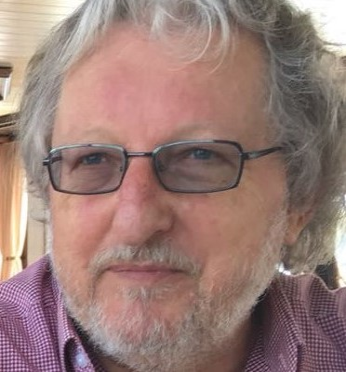
Toni Bernet-Strahm
Do not expect musicological studies, but take the following descriptions of unknown violin concertos as a guide and invitation to listen to violin concertos, consciously, subjectively, open-mindedly and curiously. The goal is to open and focus your expectation on what will happen in the music and to you.
WHY UNKNOWN VIOLIN CONCERTOS?
Because there are simply so many valuable concertos for the violin in the history of music that one should not limit oneself to the generally known concertos. Whereby known and unknown are to be
understood relatively, of course. Often, however, the discovery of the unknown can lead back to the known. Also in the history of violin concertos, "survival of the fittest" cannot be the
criterion, but rather cooperation of the most diverse variants of possibilities in the service of the preservation of the species "violin concerto".
Thanks to Youtube it is possible to get access to unknown music at any time. To hear more unknown violin concertos in concert halls, however, would be phenomenal.
LISTENING TO MUSIC AS SOMETHING EXISTENTIAL
"Here is something that touches me deeply. What is it that echoes in me and makes me cry, how has the composer reached me and brought to light something that was buried in my soul? So we musicians have a cathartic task to lead many people in a concert to existential questions in a joyful but often also painful process and also through the process of healing." (Christian Tetzlaff, violinist)
The Creative Triangle
"The 'creative triangle' - an image coined by Benjamin Britten - in which true music is created includes not only the composers, who invent a piece and write down the notes, and the performers, who rehearse these notes and bring them to life more or less adequately, but also the audience, who are prepared to listen to the music. Without an audience, there would be no music." (Eleonore Büning)
THE ESSENTIAL HAPPENS IN LISTENING...
... if we give ourselves to listening with curiosity and with attention. A listening aid to introduce and read along while listening can direct our mental antennas to better reception and make our listening more competent. Listening guide, listening aid, listening opener or listening companion, depending on the need. It can happen that the music grabs you, touches you, affects you and takes you on a journey into new (sound) worlds from beginning to end. With every listening we discover new things, see images or, as in a mirror, whole philosophies of life.

Immerse yourself in the world of sacred music and let yourself be accompanied by selected compositions. Discover the beauty and depth of the pieces of music and let yourself be inspired.
Perhaps the homepage of my violin concerto collection can also be helpful. Cf:
www.violinkonzerte.jimdofree.com
over 4500 different violin concertos of
which recordings exist -
First performance of violin concertos
-
Countries of origin of violin concertos -
Soloists of violin concertos -
Violin concertos by women in
music history.
At the end
‘For the public does not know and does not like to know
that in order to receive a work of art, half the work on it
must be done by the recipient himself.’
Ferruccio Busoni (1907/1916, 19f.)