
Anatolijus Šenderovas: Concerto for Violin and Chamber Orchestra (2007 / 2013)
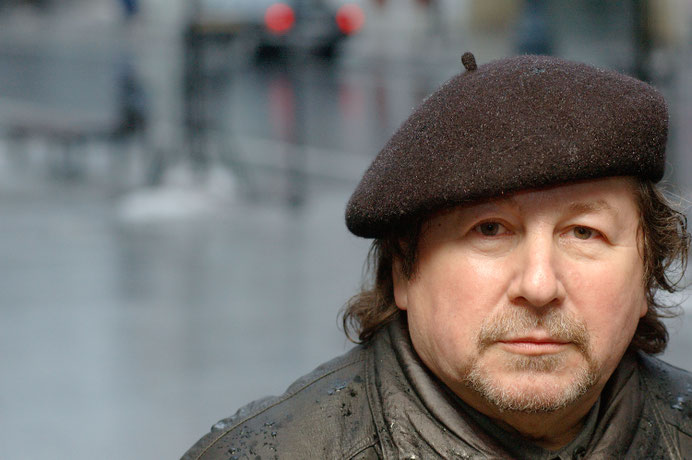
Anatolijus Šenderovas
born 21 August 1945 in Ulyanovsk, Russian SFSR, USSR died 25 March 2019 in New Jersey, USA)
Composition:
The violin concerto was composed in 2007 and revised in 2013. Sadly, it is only available as a manuscript.
Recordings:
Džeraldas Bidva 2014 (on CD)
Dalia Dedinskaite 2025 (on YouTube)
‘Music is born of mystery and is an enigma. The meaning and purpose of music is to engage and guide the listener, to draw them into a particular game, to evoke feelings. That way, you
are always sure of yourself in the creative process. Not always in life.’ So said Anatolyjus Šenderovas in an interview. I felt the same way about his violin concerto: it drew me into a listening
process before I could explain why.
In an obituary on the death of Anatolijus Šenderovas in 2019, the Lithuanian Music Information Centre listed characteristic features of his music, which can also be found in the violin
concerto:
"The specific harmonic colour, the arrhythmic, improvisational development of the musical material, the development of a work from a specific thematic motto, a pronounced emotionality and
razor-sharp contrasts – all this gave the music of Anatolijus Šenderovas an unmistakable sound that was not lacking in magical energy. It blended archaic motifs from Oriental music with more
abstract features of European atonal music. In his work, he did not adhere to a particular compositional system, but chose from the wealth of means at his disposal those that he considered most
important for each work."
Šenderovas's most influential teachers were Eduardas Balsys, one of the most important modernist composers in Lithuania at the time, and Orest Yevlakhov, a student of Dmitri Shostakovich, in
Leningrad (now St. Petersburg). Being Jewish was essential to Šenderovas's work: he grew up in Vilnius in a former ghetto. Some of his ancestors were klezmer musicians and came from the Ashkenazi
Jewish folk music tradition. After the collapse of the Soviet Union, it was important for Šenderovas to have the opportunity to travel to Israel and explore his Jewish roots through music. Many
of his works end as if the music were dissolving into heaven, as he himself once said.
Listen here!
Listening companion:
A lonely, rhythmically agitated solo recitative in dark colours ends for the time being with a trill. Then the violin starts again and, via fifths, twice seeks a path to the highest notes, where
it fades away into almost inaudibility.
Once again, as at the beginning, the violin plays this modal-sounding recitative with its rhythmically agitated appoggiaturas and once again seeks its way upwards, lingering in the quiet.
Beginning with searching glissandi, it then explores – improvising, as it were – all registers and pitches wildly, only to break off excitedly on a high note.
After the violin begins its recitative again, the string orchestra follows, accompanying its excitedly plaintive solo with short interjections. The lament darkly intensifies more and more into
despair. The string orchestra joins in, and the percussion culminates in a gong burst, allowing the despair to fade away.
Above the newly entering strings, the violin begins its lament again with long trills. Once more, it rises to lonely heights and, weary, searches for contemplation.
With rhythmic impulses, the string orchestra now takes the lead, bringing the violin back and binding it to its sounds when the violin wants to drift away.
Finally, the orchestra intervenes more decisively, accompanying the dark recitative of the violin with piano and timpani rhythms, leading to greater excitement. But once again, exhaustion sets
in. Resignation. Powerlessness. The softest glissandi in the solo violin fade into inaudibility.
But the string orchestra, including the gong, insists, bringing new plaintive sounds into play. The violin joins in again. A dialogue with the string orchestra emerges. The violin responds to the
sounds of the orchestra. The dialogue becomes more lively. Chains of trills. Runs and a new determination in the violin lead the orchestra to embrace something new and unexpectedly introduce a
new rhythm.
With this new theme, the orchestra storms ahead, carrying the violin with it, which immediately joins in with pizzicati and a broken rhythmic drive. With great energy, the orchestra,
including percussion and piano, as well as the solo violin, drive forward, propelling each other and persevering towards new vitality.
Then, on an octave sound and two hissing percussion explosions, all the energy suddenly collapses. Three long, sad notes from the violin open a melancholic recitative, beginning darkly and rising
to bright, soft tones. The orchestra plays a few accompanying chords. The violin finds the beginnings of a sad melody, but it increasingly transforms into delicate trills and questioning phrases.
Soft, sustained chords from the orchestra and gong sounds accompany the violin into the open. The violin's tremolos float away, and in the end only a delicate rolling sound from the percussion
remains.